
The migration took four months. Two of them were spent fixing audit logging gaps that auditors flagged in week one. Your team thought you had logs. What you actually had was a collection of incomplete files that would never satisfy CERT-In.
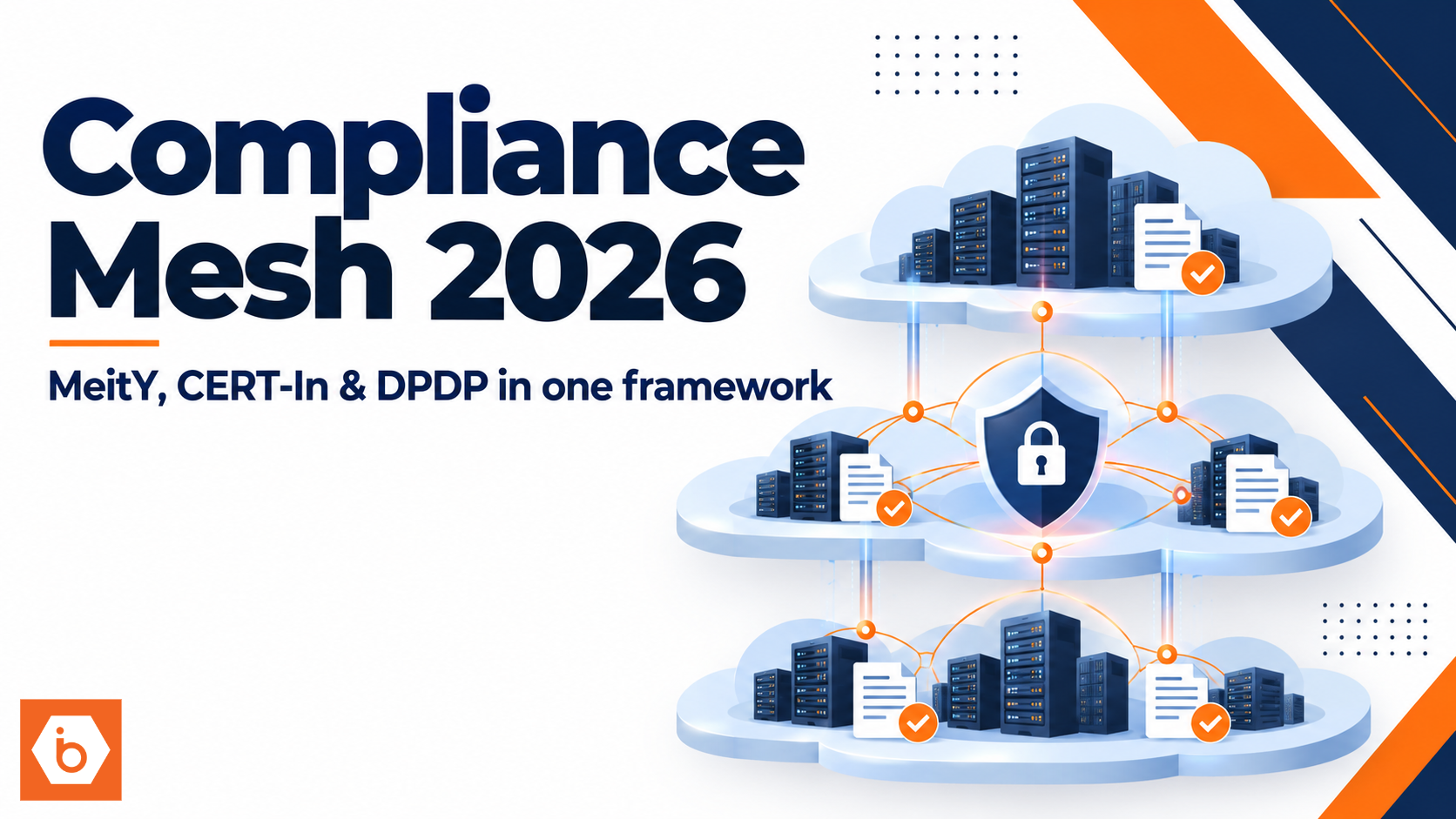
Here is what nobody tells you about Indian government compliance in 2026. The rules are no longer suggestions. MeitY, CERT-In, and the DPDP Act now form a single compliance mesh that touches every layer of your infrastructure. Ignore it and you risk blocking contracts, delaying funding rounds, or facing direct penalties.
Most teams treat compliance like a checklist they fill out before an audit. They spin up a few extra VMs, turn on basic logging, and call it done. Three months later the auditor asks for immutable logs with tamper-proof timestamps, geofenced data residency proof, and incident response times under 6 hours. The gap is painful.
You need to design for these requirements from day one. The PDF released by MeitY in early 2026 lays out clear expectations for cloud infrastructure used by government entities, critical information infrastructure, and any company handling sensitive Indian citizen data. Your Kubernetes clusters, CI/CD pipelines, and platform engineering practices must all align or you will spend the next year retrofitting instead of shipping.
Why 2026 Changes Everything
The updated guidelines tighten three areas that most engineering teams have treated loosely. Data must stay within Indian borders unless explicit exemptions apply. Audit logs must be retained for at least 180 days with cryptographic integrity controls. Incident reporting to CERT-In must happen within 6 hours for defined categories of events.
These are not theoretical. A major Indian fintech lost a government contract last year because their object storage buckets allowed cross-border replication by default. The RFP required data residency proof they could not produce in time. The loss exceeded eight figures.
Your team will feel this pressure in two places first. Procurement teams now demand compliance evidence before they shortlist vendors. Platform engineers discover during RFP responses that their current Terraform modules, Helm charts, and monitoring setup lack the required controls.
IBEE's India-sovereign infrastructure removes the cross-border risk by design. All storage and compute stay within Tier 4 data centers that meet MeitY and CERT-In physical security standards. You do not need to layer extra VPNs or custom routing to satisfy residency.
The Compliance Stack You Must Build
Start with data residency. Every workload that touches personal or sensitive data must run on infrastructure located in India. This includes your primary databases, backup copies, log archives, and any analytics pipelines. Choose regions carefully. Many global providers still route metadata or backups through Singapore or US endpoints by default.
Next, build immutable audit logging. CERT-In expects you to capture authentication events, privilege changes, configuration modifications, and data access patterns. These logs must be written to tamper-proof storage that prevents deletion or alteration even by root accounts. Most teams get this wrong by sending everything to a single Elasticsearch cluster that an attacker or rogue admin can purge.
Instead, stream logs to object storage with write-once-read-many semantics. Enable versioning and object lock policies. Use cryptographic hashing on each batch so any modification becomes detectable. Retain logs for the full 180 days minimum. After that, move them to cooler storage tiers to control cost.
Your incident response process must demonstrate sub-6-hour notification capability. This requires real-time monitoring that routes critical alerts to an on-call engineer and simultaneously creates a tamper-proof incident ticket. Automate the initial CERT-In reporting template so the first notification contains required fields without manual copying.
Platform engineering teams that treat compliance as an overlay always regret it. Bake these controls into your golden images, base Terraform modules, and CI/CD pipelines. When every new service deploys with correct logging, residency, and encryption by default, audits become boring instead of terrifying.
Architecture Decisions That Matter
Your choice of compute, storage, and networking directly impacts compliance effort. Virtual machines give you full control over the OS and kernel, which helps when auditors want to see exact patch levels and hardened configurations. Bare metal servers remove the hypervisor layer entirely, which some regulated entities prefer for their highest sensitivity workloads.
Block storage works for active databases and application data that needs low-latency IOPS. Object storage handles backups, log archives, ML datasets, and any unstructured data that benefits from 11-nines durability and built-in versioning. The key is matching the storage type to the access pattern while ensuring both meet residency and immutability rules.
Network design must prevent accidental data leakage. Use cloud firewalls to enforce strict egress rules. Block any traffic to known non-Indian endpoints. Enable private networking between your compute instances and storage so data never traverses the public internet. DDoS protection and load balancers should sit behind your own controlled edge instead of relying on third-party CDNs that might cache data outside India.
Most teams get this wrong by bolting compliance tools onto an architecture that was never designed for it. They pick their Kubernetes version, their database, and their CI/CD system first, then try to wrap compliance around it later. The result is fragile glue code, duplicated data flows, and audit findings that never quite go away.
A better approach is to define your compliance non-negotiables before you draw the first architecture diagram. Require every service to declare its data classification, residency zone, and logging destination. Enforce it in your platform's admission controllers and policy engines. This shifts the burden from auditors chasing you to the platform preventing violations.
Real-World Impact at Scale
One Indian edtech company we observed faced exactly this situation in late 2025. They had grown rapidly on a global cloud provider. When a large state government tender required full CERT-In and DPDP compliance, their team spent 11 weeks just mapping where their data actually lived. Snapshots, CI artifacts, and analytics copies had leaked across three continents.
They migrated their production workloads, backups, and log archives to infrastructure that guaranteed Indian data residency. They rebuilt their logging pipeline to write directly to object storage with object lock enabled. Within two months they could produce auditable evidence for every required control. The tender outcome improved dramatically.
The numbers are straightforward. They reduced their egress spend by more than 60% once they stopped moving data across global regions unnecessarily. Their audit preparation time dropped from six weeks to four days. Most importantly, they stopped treating compliance as a project and started treating it as a property of their platform.
What You Should Do Today
Open your architecture diagram. Ask three questions about every workload that touches Indian user data.
Where does the data rest? Can you prove it never leaves Indian borders? How do you ensure logs are immutable and retained for 180 days? Who gets alerted within six hours if an incident occurs?
Write the answers down. If any of them rely on manual processes, third-party regions, or hope, you have work to do. Start by auditing your current object storage configuration and log destinations. Then update your Terraform modules to enforce residency and immutability by default.
Compliance in 2026 is not about adding more tools. It is about building systems that cannot violate the rules even if someone tries. Get the foundations right now and your next audit becomes a confirmation instead of a crisis.
Take the first step this week. Pick one production service, map its full data path from ingestion to backup, and verify every hop stays inside compliant Indian infrastructure. The time you invest today prevents months of rework when the next RFP or audit lands on your desk.