
The Streaming Business Has an Infrastructure Cost Problem
Every time a viewer in Nagpur plays an episode, every time a reader in Bhopal opens a photo gallery, every time a listener in Kochi streams an album, something happens in the background that nobody on the product team talks about until the finance team does.
Data leaves the cloud. And on every major hyperscaler, data leaving the cloud is billed at rates that were designed for enterprise software applications, not for media companies whose entire product is data being transferred to users, constantly, at scale.
An OTT platform generating 135 TB of monthly egress pays approximately Rs.14 lakh (~$14,754) per month in S3 egress costs at AWS Mumbai rates of Rs.10.37/GB ($0.1093/GB), before storage, compute, CDN delivery charges, or any other infrastructure expense. All USD equivalents in this article use a conversion rate of Rs.94.91 per dollar as of May 2026.
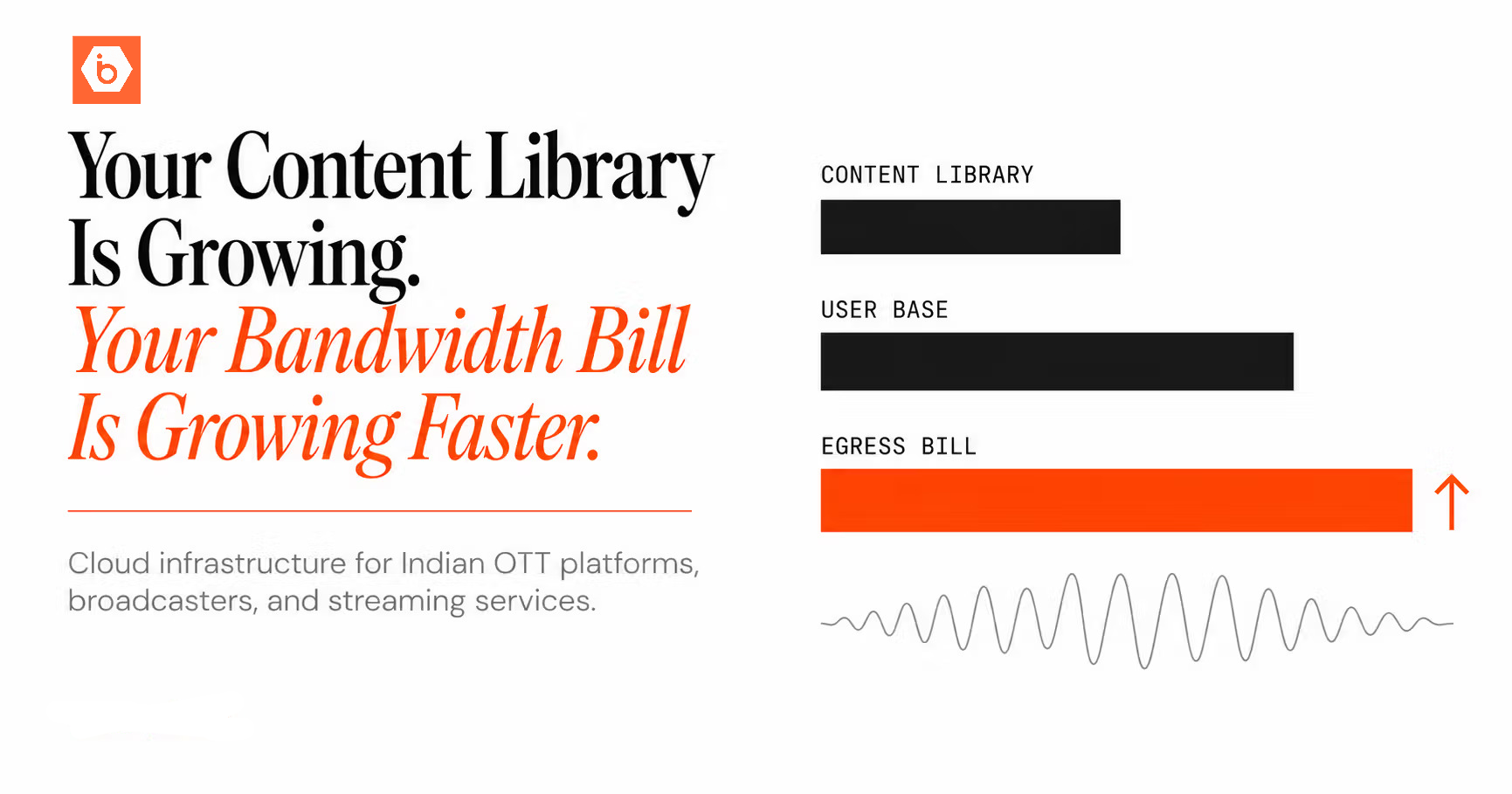
The content library keeps growing. The user base keeps growing. And the egress bill grows with both, compounding in a way that erodes margin at exactly the stage when a media platform most needs to be reinvesting in content.
A Real Scenario: The Regional OTT Platform Caught Between Content Cost and Infrastructure Cost
Consider a regional language OTT platform. 800,000 subscribers, a library of 12,000 hours of content, growing at 200 new titles per month. Well-funded, growing steadily, serving a deeply engaged audience.
Their infrastructure team was competent. Their AWS architecture was standard. Their problem was a unit economics calculation that was not working out.
At 800,000 subscribers paying Rs.199/month, monthly revenue was around Rs.1.6 crore (~$190,000). Their cloud infrastructure bill, dominated by S3 storage for the content library and CloudFront egress for delivery, was running at Rs.28 lakh (~$33,700) per month, or about 17.5% of revenue. Industry benchmarks for sustainable OTT economics put cloud infrastructure at 8 to 12% of revenue.
The gap was not a content problem or a subscriber problem. It was an egress problem. Every stream delivered to a viewer in a Tier 2 city was more expensive than it needed to be, because the data was travelling from infrastructure that was not optimised for those routes, at egress rates that made every viewer marginally less profitable than the revenue model assumed.
We have seen this pattern repeatedly with regional content platforms: the product is working, the audience is loyal, and the infrastructure bill is quietly undermining the unit economics before anyone notices.
The business was working. The infrastructure pricing model was working against it. A regional OTT platform with a loyal audience should not be fighting its own cloud bill for margin.
Why Media Workloads Are Uniquely Penalised by Hyperscaler Pricing
Every category of cloud workload pays some egress. Media workloads pay more than almost any other, for a structural reason: the product itself is data transfer. You are not running software that occasionally moves data. You are moving data as the core act of delivering value to every single user.
Video Is the Highest-Egress Workload in Existence
A 4K video file is 4 to 8 GB per hour of content. Even at 1080p, a two-hour film is 6 to 10 GB. An OTT platform serving 100,000 concurrent streams at any given moment is generating egress that, at hyperscaler rates, costs more per hour than the subscription revenue from those same viewers. The mathematics of streaming economics only works at scale when the infrastructure cost per stream is low enough.
AWS and GCP egress rates were not designed with this use case in mind. They were designed for enterprise applications where data transfer is a secondary activity. For media, it is the primary activity, and the pricing reflects that mismatch.
Content Libraries Grow Permanently
Unlike most enterprise data, media content is rarely deleted. A news organisation's archive from 2010 is still potentially valuable. A music platform's back catalogue from independent artists is permanent inventory. A film library acquired three years ago is still being streamed today.
This creates a storage profile that grows monotonically over time. On hyperscaler pricing, this means storage costs that accumulate without a natural ceiling, and egress costs that apply every time any piece of the archive is accessed, whether it is a new release or a title from five years ago.
Live Events Create Unpredictable Cost Spikes
A cricket match, a film premiere, a music festival livestream: live events generate burst traffic that can be 10 to 50 times normal load. On hyperscaler egress pricing, peak traffic costs peak prices. There is no bulk rate for your highest-demand moments. The infrastructure bill for a single major live event broadcast can exceed several months of normal egress spend.
Serving Bharat, Not Just Metros
India's media consumption growth is concentrated in Tier 2 and Tier 3 cities: Indore, Coimbatore, Guwahati, Jodhpur, Mysuru. These are the audiences that Indian language content platforms exist to serve. They are also the audiences most affected by latency from infrastructure that is not optimised for their network routes.
Buffering and slow load times on a hyperscaler's shared availability zone do not just degrade experience; they drive churn. On a regional OTT platform where subscriber retention is the business model, churn from poor streaming performance is a direct revenue problem with an infrastructure cause. The connection between origin latency and subscriber retention is one that media infrastructure teams learn quickly, and usually at cost.
How IBEE Solves the Media Infrastructure Problem
IBEE operates from Tier 4 certified data centres in India, delivering 99.995% uptime on infrastructure built and optimised for Indian network topology. For media companies, the combination of dramatically lower egress costs and genuinely local infrastructure changes the unit economics of serving Indian audiences.
Egress at Rs.2/GB — Media Economics That Actually Work
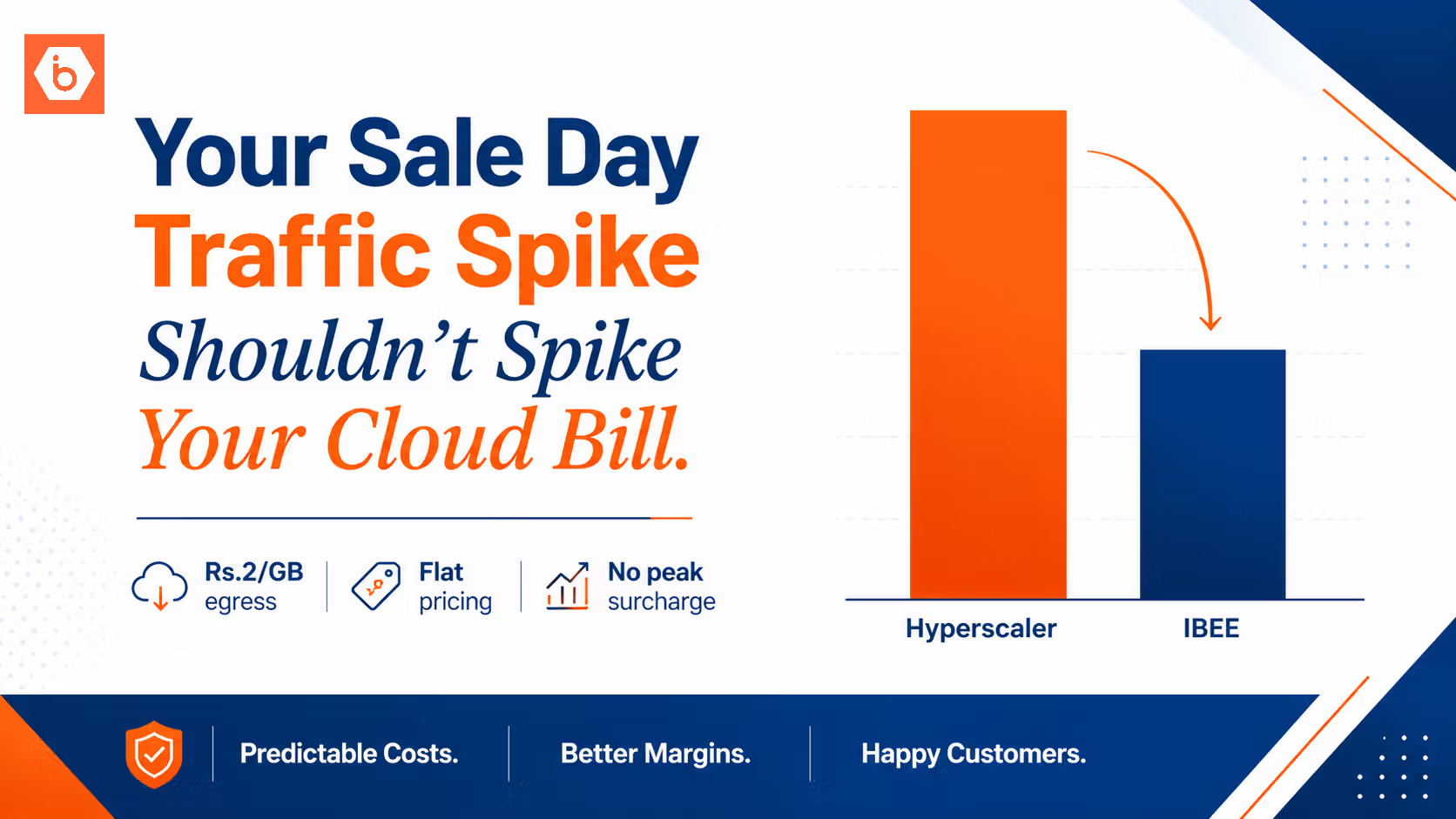
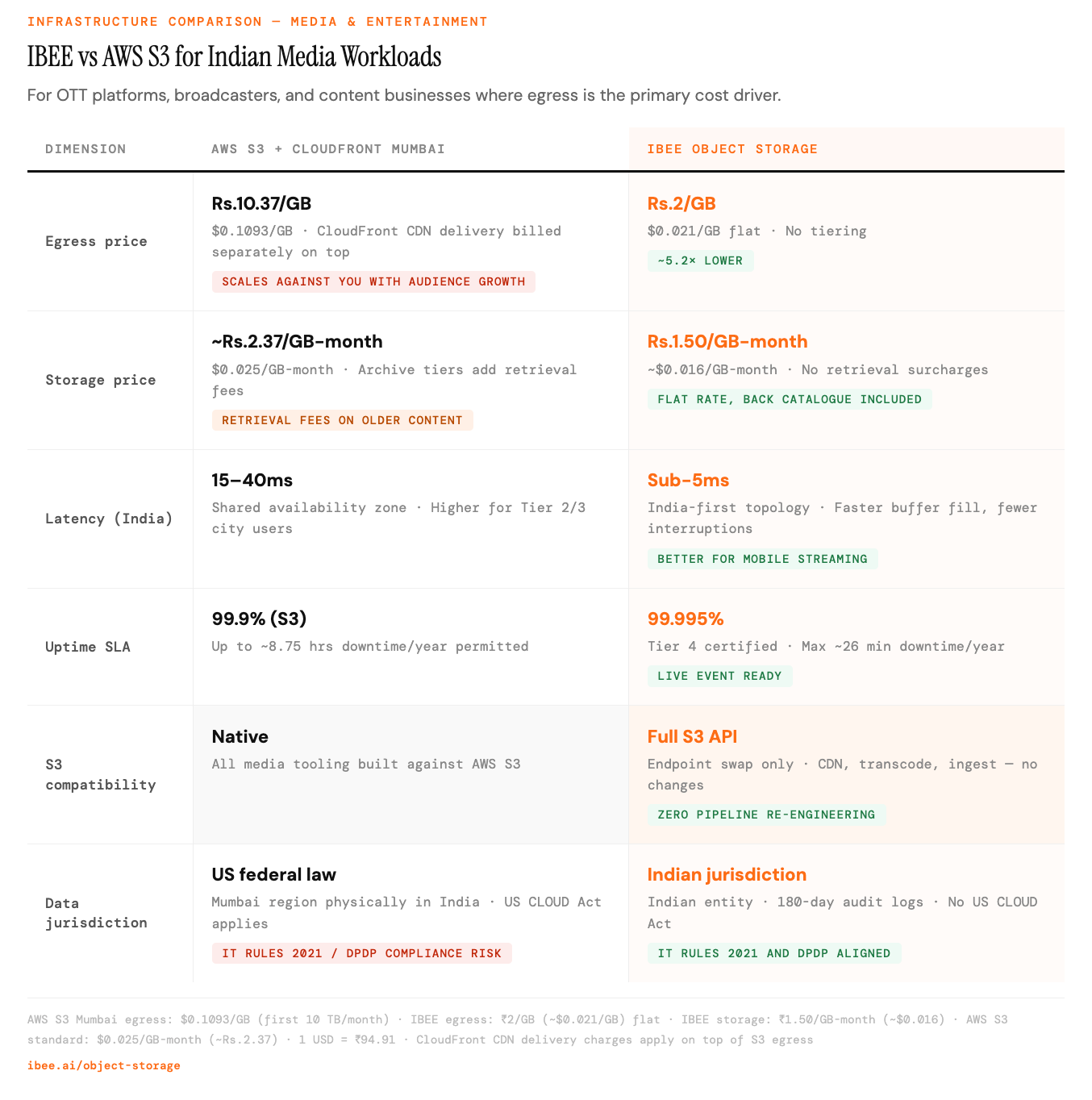
IBEE charges Rs.2/GB ($0.021/GB) for internet egress. AWS Mumbai charges Rs.10.37/GB ($0.1093/GB) for S3 egress, with CloudFront CDN delivery adding further cost on top. For an OTT platform, the difference is not a minor optimisation. It is the difference between a content delivery economics model that works and one that does not.
The regional OTT platform paying Rs.28 lakh/month (~$33,700) in AWS infrastructure costs would pay approximately Rs.8 to Rs.10 lakh/month (~$9,600 to $12,000) for the same storage and delivery volume on IBEE. That Rs.18 to Rs.20 lakh (~$21,700 to $24,000) monthly difference, applied to content acquisition or marketing, changes the competitive position of a regional platform meaningfully.
Sub-5ms Latency for Indian Streaming Audiences
IBEE's India-first infrastructure delivers content from infrastructure that is physically and topologically close to Indian users, including users in smaller cities. Lower latency at the storage origin means faster buffer fills, reduced startup time, and fewer mid-stream interruptions. For mobile-first streaming audiences on variable connections, origin latency matters more than it does for desktop users on fixed broadband.
Tier 4 Reliability for Live Events and Peak Traffic
Live events are the highest-stakes moments in media infrastructure. Tier 4 data centre certification means redundant power, cooling, and network paths with zero single points of failure. The storage layer does not become the bottleneck during a high-concurrency live event. IBEE's 99.995% uptime SLA applies equally to peak traffic moments and quiet weekday afternoons.
Full S3 Compatibility With Existing Media Workflows
Media production workflows, including ingest pipelines, transcoding queues, CDN origin configurations, and metadata management systems, are largely built around S3-compatible storage. IBEE's full S3 API compatibility means these workflows integrate without modification. Transcoding jobs that write output to S3 write to IBEE. CDN origins that pull from S3 pull from IBEE. Ingest pipelines that upload to S3 upload to IBEE. The migration is an endpoint URL change in your origin configuration, not a re-engineering of the media pipeline.
Content Archive Storage Without Retrieval Penalties
IBEE's flat pricing carries no retrieval surcharges and no minimum storage duration penalties. A documentary from 2018 that gets one stream per month costs exactly the same per-GB to serve as a new release getting 10,000 streams. For platforms with large back catalogues, this removes a hidden cost that grows with archive depth on hyperscaler tiered storage products.
In media workloads egress is the primary cost driver.
Content Compliance and Data Residency for Indian Media
Indian media companies face an emerging set of data obligations that are not always front of mind for technology teams focused on streaming performance.
The Information Technology (Intermediary Guidelines and Digital Media Ethics Code) Rules 2021 require OTT platforms and digital news publishers to maintain certain records and logs within accessible Indian infrastructure. The DPDP Act creates data fiduciary obligations for platforms holding subscriber data, viewing history, and payment information.
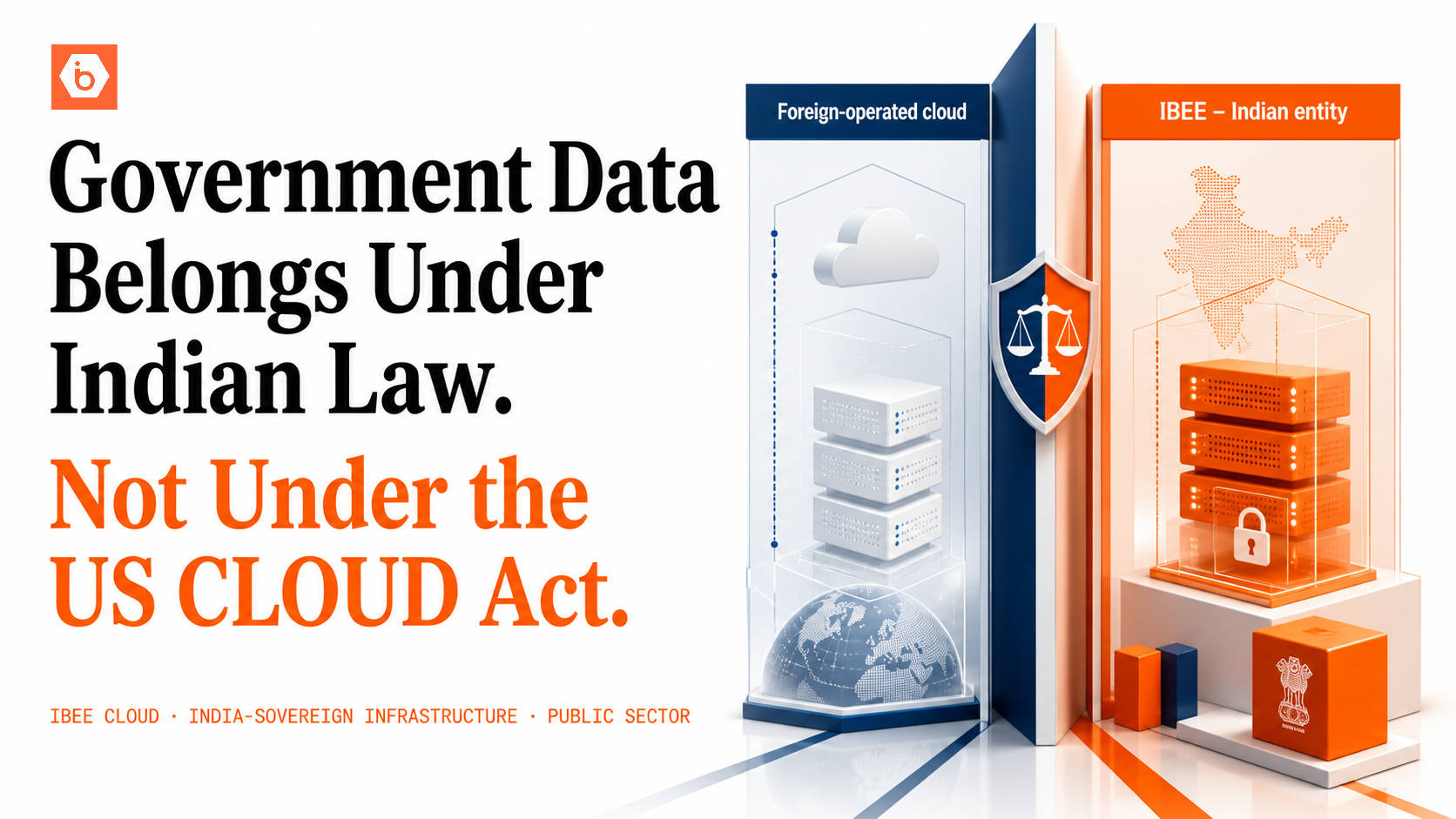
IBEE's India-sovereign infrastructure provides a clean foundation for these obligations. Content stored on IBEE is stored on Indian-entity-owned infrastructure, under Indian law, with 180-day audit log retention included as standard and no US CLOUD Act exposure.
Getting Started for Media Workloads
The typical integration path for a media company moving content storage to IBEE is straightforward. Update your CDN origin configuration to point to IBEE's S3-compatible endpoint. Update the access credentials. Run your transcoding pipeline against IBEE storage for new uploads. Migrate your existing content library in batches using rclone or the AWS CLI, both of which work with IBEE out of the box.
For live streaming infrastructure using S3 as the HLS or DASH segment store, the integration is the same endpoint change in the origin server configuration. Most media teams complete the integration in a day or two. The cost difference shows up in the first full month's bill.